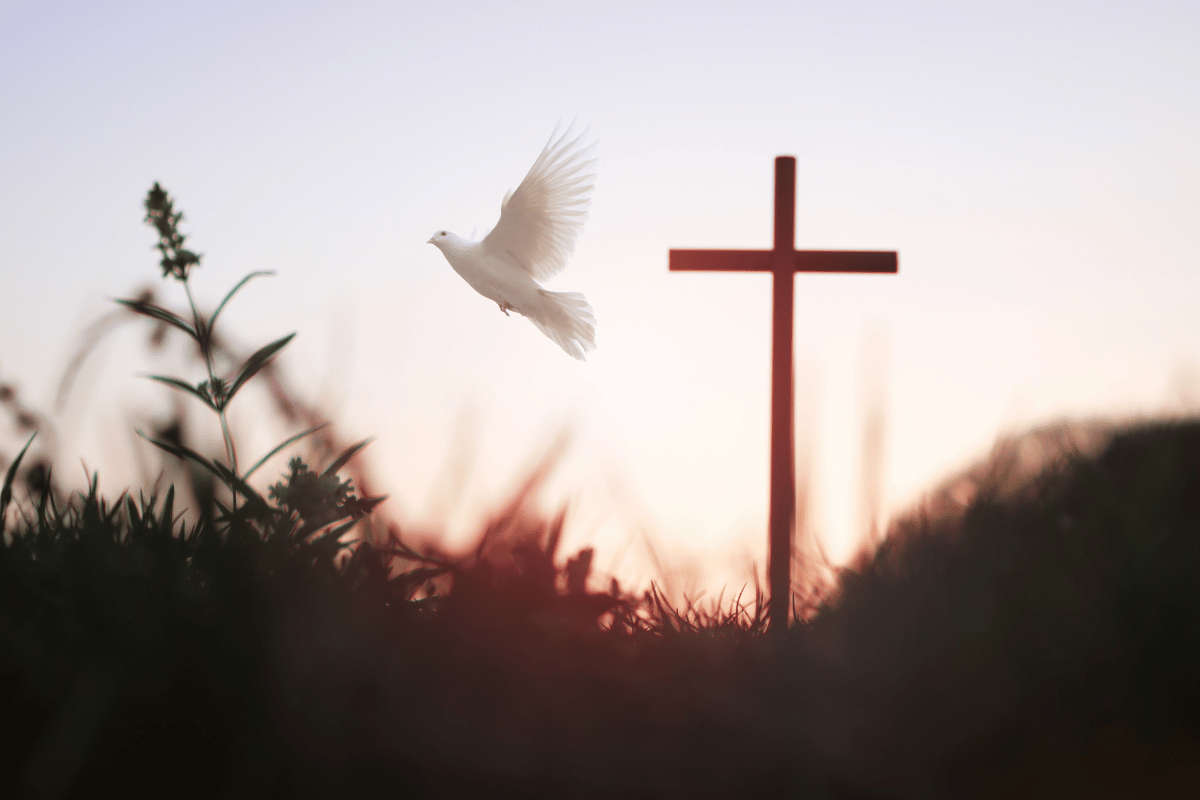
Pentecost Sunday is a Christian holiday celebrated each year on the 49th day after Easter Sunday. It marks the outpouring of the Holy Spirit on everyone, irrespective of their gender, age or status, and is the fulfilment of a promise given to the ancient Hebrew prophets hundreds of years earlier and later told by Jesus before he left the earth. It was also one of the most life-changing events in church history, but what is its significance for us?
A violent wind, tongues of fire and people in a seemingly drunken state… the experience of Pentecost turned a hapless group of disheartened Jews into a force to be reckoned with. Amongst it all, the Apostle Peter stood up before the crowd and highlighted the significance of the occasion:
This is what was spoken by the prophet Joel: “‘In the last days, God says, I will pour out my Spirit on all people. Your sons and daughters will prophesy, your young men will see visions, your old men will dream dreams.” (Acts 2:16,17)
In the two thousand years since this event, there have been many different ways to understand the significance of Peter’s words. While everyone agrees that this day marked a powerful dissemination of the Spirit on every person, they do not always agree on what this means for the ongoing church.
A New Spiritual Speech
For some – particularly those from the Pentecostal tradition – Pentecost Sunday means that when the Spirit is poured out on a person, everyone will be able to speak in a new spiritual language. Some of our most famous revivals since the first Pentecost show how this gift of spiritual speech has continued to occur. For some, this has meant being able to speak in a recognised language they have never learnt, while others emphasise a heavenly language that is useful for prayer and Paul mentions later in his letter to the Corinthian church (1 Cor. 14:2).
A Big Vision for Our Lives
Another reading of Peter’s interpretation of Acts 2 emphasises the idea that the Spirit’s outpouring makes us “visionaries.” This is a common understanding in Western churches. The phrase “dreams and visions” is understood to be a metaphor for our sanctified imagination. So with God, we can have a great “vision for our lives.” This “vision” points to a God-ordained destiny that transcends our natural limitations and imagination.
Empowerment for Miraculous Witness
The outpouring of the Spirit on every person is also equated with the ability to perform miracles in the pattern of Jesus. This includes miracles of healing as displayed in the lives of the early church leaders after Pentecost. Not only did the miracles usher in God’s kingdom, but they acted as a sign for witness so that others would turn to God. Believers would also be filled with boldness, courage and the capacity to take the message into new places and cultures. This empowerment for witness directly echoes Jesus’ words before he ascended to heaven: the disciples would “receive power” when the Holy Spirit came on them; and they would be his “witnesses in Jerusalem, and in all Judea and Samaria, and to the ends of the earth.” (Acts 1:8)
Ability to Prophesy
Another interpretation of Peter’s words is that the dissemination of the Spirit gives everyone the ability to prophesy – that is, to hear God’s voice on behalf of someone else.
This prophetic capacity is later qualified by Paul’s letter to the Corinthian church, when he writes that not everyone has a gift of prophecy or the call of a prophet (1 Corinthians 12). Later Paul writes that contemporary prophets in the church have a specialist vocation to equip the church to hear from God for themselves (Ephesians 4:11,12). In addition, they may be used of God to speak to the wider church (as in the example of Agabus, Acts 11:28).
Ability to Hear the Spirit for Ourselves
The final interpretation for the experiences of Pentecost is that Peter’s words reflect an understanding that every person has been given the ability to hear God’s voice for themselves. The phrases Peter quotes: “sons and daughters” and “young and old men” are presented in Acts 2 as a Hebrew parallelism. This is a poetic device (note how they are arranged in our Bibles) used to emphasise the fact that people from every demographic: young and old, male and female – now have access to the revelatory Spirit.
This is in contrast to the time of the Old Covenant, when only specially appointed people known as “prophets” could hear from God. Before Jesus, dreams and visions were the most common way God spoke to the prophets (Numbers 12:6, 1 Samuel 28:15b, Hosea 12:10). They would hear God’s voice in dreams and visions and then pass the message on as prophecy to the people.
The tongues of fire, wind and prophetic voice at Pentecost should also remind us of another instance of fire, wind and prophetic voice back at Sinai when Moses received the divine message on behalf of the people (Exod. 20:18,19; Num. 11:24). It is no coincidence that Pentecost celebrates access to the prophetic Spirit to everyone in contrast to access to the prophetic message through Moses (see also Hebrews 12:18,22-24).
This understanding of the backdrop of Pentecost places Peter’s words in context. For Peter, the big shift on Pentecost Sunday, was not primarily endowment with power, a new prayer language or even boldness for mission, although all those things are important.
The most crucial shift on Pentecost was the capacity for all to receive direct revelation from the Spirit – to hear the continuing voice of Jesus and follow (John 10:27). This reiterates Jesus’ teachings before he died that the Spirit would speak as his continuing voice to remind them of Jesus and to speak about things to come (John 14:26; 16:13). It is from the place of Spirit revelation that has facilitated transformation and discipleship that we receive the commission to witness, speak prophetically to others, pray in the Spirit, heal the sick, testify to the kingdom and fulfil one’s God-given purpose.